
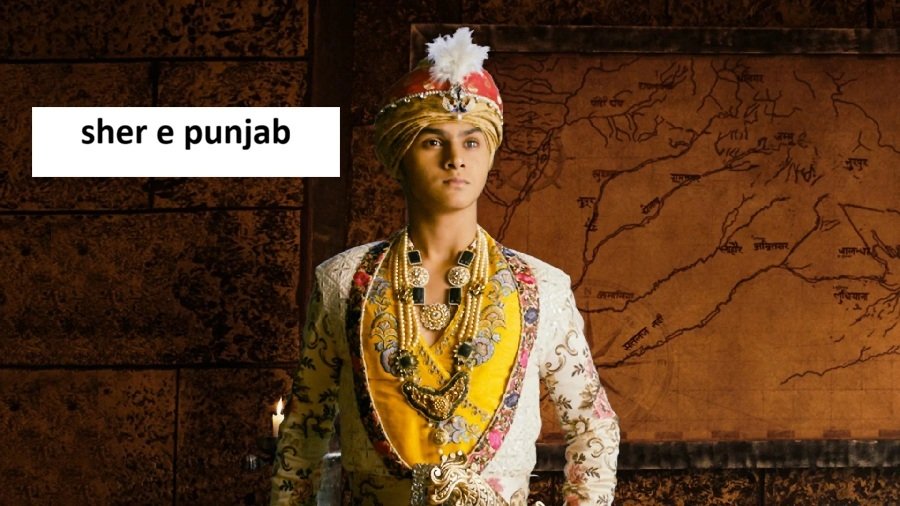

Sher E Punjab: Who Was the Lion of Punjab?
Sher E Punjab, moreover written as Sher-e-Punjab or Sher-i-Punjab, technique “Lion of Punjab.” The name is famously related to Maharaja Ranjit Singh (1780–1839), one of the most influential rulers inside the statistics of Punjab. He mounted a effective Sikh Empire, strengthened its army, extended its territory, and advanced an control that protected humans from exquisite spiritual groups.
Maharaja Ranjit Singh have become a photo of courage, political vision, and control. During a length at the same time as Punjab confronted political divisions and conflicts, he brought several Sikh territories underneath a unified authorities. His capital, Lahore, have become an essential centre of political energy, manner of life, and manipulate.
The call Sher E Punjab keeps to keep historic and cultural significance. It reminds humans of a period when Punjab emerged as a effective neighborhood usa below a ruler stated for military functionality and sensible international relations.
Sher E Punjab Meaning in English and Hindi
The title Sher-e-Punjab has an easy but powerful meaning. The word “Sher” means lion; at the same time, “Punjab” refers to the historical area associated with the land of 5 rivers.
| Detail | Information |
|---|---|
| Popular title | Sher E Punjab |
| Meaning in English | Lion of Punjab |
| Meaning in Hindi | पंजाब का शेर |
| Famous historical figure | Maharaja Ranjit Singh |
| Birth year | 1780 |
| Death year | 1839 |
| Empire | Sikh Empire |
| Famous capital | Lahore |
| Historical importance | Unification and expansion of Punjab under one powerful ruler |
The select out represents bravery, strength of mind, and the capability to influence eventually of tough instances. Although the expression has additionally been used for extremely good outstanding figures, Maharaja Ranjit Singh is sincerely considered one of its fine-recognised ancient institutions.
Early Life of Maharaja Ranjit Singh
Maharaja Ranjit Singh have become born in 1780 in Gujranwala, a city now positioned in Pakistan. His father, Maha Singh, have end up the chief of the Sukerchakia Misl, one of the Sikh political and army confederacies of that length. His mother was Raj Kaur.
Ranjit Singh grew up throughout a time of political uncertainty in Punjab. Different rulers and army agencies controlled numerous territories, and retaining energy required courage, strategic questioning, and strong alliances.
As a more youthful boy, Ranjit Singh skilled excessive fitness annoying conditions, which includes smallpox, which affected his eyesight. Despite the ones issues, he advanced right into a decided military chief. After his father’s loss of life in 1792, he often assumed extra duty for his own family’s territories and political function.
His early stories helped him recognize the significance of navy strength, alliances, and effective control. These traits later achieved a significant feature within the established order of the Sikh Empire.
How Did Ranjit Singh Become Sher E Punjab?
Ranjit Singh earned reputation through his navy achievements, political judgment, and capability to unite territories below his authority. Instead of very last a nearby chief, he advanced his have an impact on and mounted a centralised nation.
One of the maximum crucial moments in his upward thrust came in 1799, at the same time as he took control of Lahore. Lahore become a major political and commercial organization centre, and gaining manipulate of the metropolis substantially strengthened his role.
In 1801, he changed into formally proclaimed Maharaja. This marked an essential level inside the improvement of the Sikh Empire. From Lahore, he labored to consolidate his authority, make stronger the army, and expand his have an impact on into neighbouring areas.
His popularity as a courageous and succesful ruler grew as his u . S . Progressed. His achievements in army control and management helped installation his historic association with the call Sher E
Establishment of the Sikh Empire
The Sikh Empire evolved below Ranjit Singh’s management for the duration of the early nineteenth century. Before his upward thrust, Punjab have grow to be divided amongst one-of-a-type political powers. His achievement got here from combining military campaigns with negotiations, alliances, and administrative consolidation.
His authorities made Lahore the centre of the kingdom. Over time, his territories included important regions at the side of Amritsar, Multan, Kashmir, and Peshawar, irrespective of the reality that the ones regions got here below his manage at one in each of a type degrees.
The empire’s boom bolstered Punjab’s political position in northwestern South Asia. It additionally helped create a extra unified device of presidency throughout territories that had formerly been divided.
Major Regions Associated With the Sikh Empire
| Region | Historical importance |
|---|---|
| Lahore | Capital and principal centre of government |
| Amritsar | Important religious and commercial centre |
| Multan | Strategic city and regional trading centre |
| Kashmir | Mountainous region brought under Ranjit Singh’s control |
| Peshawar | Important frontier city |
| Gujranwala | Ranjit Singh’s birthplace and the base of his family |
These regions finished one-of-a-kind roles in the state’s political, military, and economic development. Their inclusion demonstrates the dimensions of Ranjit Singh’s enlargement and the importance of strategic towns in constructing the empire.
Military Strength and Leadership
One of the maximum vital motives for Ranjit Singh’s historic popularity have end up his capacity to construct a sturdy and disciplined military. He understood that a effective navy become vital to protect the kingdom, guard its frontiers, and preserve political balance.
His forces protected cavalry, infantry, and artillery. He also labored to modernise sections of the army with the aid of adopting military schooling strategies and strategies motivated thru the use of European practices.
Ranjit Singh recruited expert commanders and officials from splendid backgrounds. Military leaders at the aspect of Hari Singh Nalwa have become exceptional figures within the empire’s campaigns and frontier management.
His navy method combined conventional strengths, which includes cavalry, with organised infantry and artillery. This helped his forces characteristic more efficiently in terrific geographical conditions.
However, the achievement of the Sikh Empire did now not depend upon navy electricity by myself. Ranjit Singh extensively applied global members of the own family and political agreements to control relationships with neighbouring powers.
Important Features of His Military System
- Organised forces: He advanced a more based totally absolutely army below primary authority.
- Modernisation: He strengthened artillery and introduced stepped forward schooling techniques.
- Experienced commanders: Skilled army leaders helped manipulate campaigns and frontier territories.
- Strategic planning: His campaigns centered on vital cities, routes, and shielding positions.
- Diplomacy: Agreements with neighbouring powers helped protect the dominion’s pursuits.
These achievements contributed to his popularity as a capable navy strategist and helped set up the energy of the Sikh Empire.
Administration and Governance Under Sher E Punjab
Ranjit Singh’s importance extends past his navy victories. He moreover advanced an control that helped govern a numerous and geographically big u . S ..
The Maharaja remained the primary authority, overseeing most important political, army, and administrative alternatives. Officials had been appointed to govern finance, provincial affairs, military topics, and members of the family with special rulers.
His court protected Sikhs, Hindus, Muslims, and European officials. People from one-of-a-kind religious backgrounds held positions of duty, reflecting the practical and comparatively inclusive nature of his management.
Faqir Aziz-ud-Din, a Muslim diplomat and adviser, performed an essential function in diplomatic affairs. His provider illustrates how Ranjit Singh depended on understanding and revel in across network strains.
The management come to be now not a cutting-edge democracy, and the Maharaja retained large personal authority. Nevertheless, his willingness to rent capable people from specific backgrounds remains an essential feature of his historical legacy.
Key Characteristics of His AdministrationAdministration
| Administrative feature | Description |
|---|---|
| Central government | The Maharaja held the highest political authority |
| Provincial management | Officials administered important territories |
| Military organisation | A centralised army supported the kingdom |
| Diplomacy | Negotiations and agreements helped manage external relations |
| Religious diversity | People from different communities served in government |
| Revenue administration | Officials managed taxation and state income |
Ranjit Singh’s authorities helped hold the empire in the path of his lifetime. Its later instability furthermore demonstrates how strongly the tool depended on his private management and the relationships he maintained with powerful officials.
Religious Tolerance and Cultural Contributions
Maharaja Ranjit Singh changed into a devoted Sikh ruler, however his manipulate have grow to be now not constrained to humans of his very own religion. He appointed officers from without a doubt certainly one of a kind corporations and supported religious establishments associated with Sikhism, Hinduism, and Islam.
His technique to governance helped him maintain relationships with human beings from one in every of a kind backgrounds all through the empire. His court docket docket blanketed Sikh generals, Hindu directors, Muslim diplomats, and European army advisers.
He moreover supported critical religious websites and contributed to the development and decoration of non secular institutions. His association with the Harmandir Sahib, popularly called the Golden Temple in Amritsar, stays an essential a part of his cultural legacy.
His patronage contemplated the non secular and cultural variety of Punjab. It moreover helped guide the connection among his authorities and the area’s hooked up non secular institutions.
Economic Development During His Rule
A sturdy us of a favored more than a powerful army. It furthermore required functioning markets, agricultural manufacturing, trade routes, and a dependable earnings gadget.
During Ranjit Singh’s reign, Lahore and one-of-a-type crucial towns served as centres of commerce and management. Punjab’s region associated severa shopping for and promoting areas of northwestern South Asia, making close by routes valuable for merchants and the dominion.
Agriculture modified into an crucial supply of livelihood and revenue. The government gathered taxes and depended on provincial officers to manipulate earnings-associated obligations.
The empire’s political stability in the course of heaps of Ranjit Singh’s reign helped create conditions in which exchange and urban life must maintain. However, economic conditions differed in the course of areas, and the advantages of his rule were no longer always dispensed equally amongst all groups.
His legacy is therefore first-rate understood through a aggregate of navy achievement, political consolidation, administrative agency, and cultural patronage.
Relationship With the British
The East India Company developed its effect throughout the Indian subcontinent during the course of Ranjit Singh’s lifetime. Managing family participants with the Company changed into one of the important traumatic situations handling his government.
In 1809, Ranjit Singh concluded the Treaty of Amritsar with the British. The settlement helped define the political courting many of the 2 powers and restricted the Maharaja’s growth across the Sutlej River.
Ranjit Singh generally pursued a sensible foreign policy. He reinforced his personal United States of America at the same time as looking to avoid a first-rate battle of phrases with the British that might threaten his position.
His diplomatic approach allowed the Sikh Empire to maintain a massive, impartial strength for some unspecified time in the latter part of his lifetime. After his demise in 1839, internal rivalries and political instability weakened the dominion. The Anglo-Sikh Wars, in the end, led to the British annexation of Punjab in 1849.
Death of Maharaja Ranjit Singh
Maharaja Ranjit Singh died in Lahore on 27 June 1839. His loss of life marked an extremely significant turning point in the history of the Sikh Empire.
During his lifetime, his non-public authority helped keep a huge union together. S . A . Containing particular political pastimes and community power centres. After his loss of life, succession disputes, court rivalries, and conflicts among military and political corporations weakened the government.
His successors struggled to hold the stability and brotherly love that had characterised tons of his reign. The empire eventually out of region its independence to the British in 1849.
Despite the empire’s eventual decline, Ranjit Singh’s achievements endured to persuade the memory of Punjab. He is remembered as a ruler who converted a divided political landscape into a powerful usa.
Why Is Sher E Punjab Still Remembered Today?
Sher E Punjab stays a full-size name because it represents an essential figure in Punjab’s history. Maharaja Ranjit Singh’s life offers s about management, political strategy, and the demanding situations of governing a numerous populace.
His legacy is remembered for numerous reasons:
- Political unification: He introduced several territories beneath a huge government.
- Military business employer: He advanced a powerful army and stepped forward its abilities.
- Diplomatic information: He used negotiations and political agreements to guard his kingdom.
- Religious variety: He appointed succesful officers from one in all a kind companies.
- Cultural patronage: He supported spiritual establishments and cultural traditions.
- Historical have an impact on: His reign remains a huge challenge in the study of Punjab and Sikh statistics.
His achievements need to be taken into consideration alongside the policies of monarchical rule and the instability that observed his demise. A balanced ancient a recognises all his accomplishments and the challenging situations he confronted in the course of the empire.
Frequently Asked Questions (FAQs)
1. Who is called Sher-e-Punjab?
Maharaja Ranjit Singh is famously known as Sher E Punjab, which means the Lion of Punjab. He set up the Sikh Empire and turned out to be one of the most influential rulers in the region’s history.
2. What is the which means that of Sher E Punjab in Hindi?
Sher E Punjab technique “पंजाब का शेर” in Hindi. The call symbolises bravery, electricity, leadership, and the historic significance of Punjab.
3. When was Maharaja Ranjit Singh born?
Maharaja Ranjit Singh was born in 1780 in Gujranwala, it’s miles away in Pakistan.
4. When did Maharaja Ranjit Singh turn out to be Maharaja?
Ranjit Singh was officially proclaimed Maharaja in 1801, marking a big milestone within the established order of the Sikh Empire.
5. What come to be the capital of the Sikh Empire?
Lahore became the capital and most vital administrative centre of the Sikh Empire underneath Maharaja Ranjit Singh.
6. Why did Maharaja Ranjit Singh end up critical in Indian records?
He united several territories, advanced an effective military, extended the Sikh Empire, and mounted a manipulation that included officers from precise spiritual businesses.
7. When did Sher E Punjab die?
Maharaja Ranjit Singh died on 27 June 1839 in Lahore.
8. Was Maharaja Ranjit Singh religiously tolerant?
His management blanketed Sikh, Hindu, Muslim, and European officials. He moreover supported non-secular institutions from special traditions, making the non-secular range a crucial part of his historic legacy.
Conclusion
Sher-e-Punjab, the Lion of Punjab, is a title commonly associated with Maharaja Ranjit Singh and his tremendous role in the history of the Indian subcontinent. Through military achievements, political unification, diplomacy, and administrative management, he set up a effective Sikh Empire with Lahore as its capital.
His reign tested the importance of strategic thinking, powerful management, and cooperation among humans from one-of-a-kind backgrounds. Although the empire weakened after his lack of lifestyles and finally fell under British rule, his have an impact on stays studied and remembered.
Understanding the data of Sher E Punjab gives precious perception into Punjab’s political development, Sikh records, and the broader facts of 19th-century South Asia.